Wednesday, March 06, 2013

                                                    HOODED CROW IN GARDEN


We don't ever see the all black carrion crow over here, but have large numbers of these handsome hoodies, which I rather like. They are sociable busy birds, but many people loathe them because of their bullying, opportunistic behaviour and reputation for attacking lambs and other vulnerable stock. For reasons unknown to me, hoodies only seem to occur in Scotland and I have never seen one South of the border in England. Anybody know why?

Now, in general, I see society as slowly pushing forward positively, but recently, national and local decisions brought about by financial cuts lead me to conclude that we might all be going to hell in a handcart.
Many people in our communities are dependent on state benefits for income, often as a consequence of unemployment, medical conditions or other difficult circumstances. Current benefit levels provide a basic low level of financial support that I don't think I could live on and do not provide enough money to cope with emergencies or unexpected expenditure. The Social Fund has, until now, provided a safety net to claimants in the form of Community Care Grants and Crisis Loans, both of which are to be abolished from next month.
A new replacement system, administered by local authorities, will be discretionary. I have little doubt that these changes, along with Housing Benefit reductions brought about by the new 'Bedroom Tax' will create great hardship and increased poverty.

At a local level, the council have announced that they are going to abolish the Barra to Benbecula lifeline air service and reduce the Benbecula to Stornoway flights to three days a week. Schools are still being closed around the islands and pupils are having to travel further each day to alternatives.

In spite of all this, there are good things happening around the islands. Our new ferry has been ordered from a shipyard in Germany and should come into service about June of next year. It's going to be a diesel/electric hybrid ship and will be able to sail round the clock, with servicing and repairs being undertaken at sea. It will be a bigger, more powerful vessel than our current ferry, the 'Isle of Lewis' and will reduce the Stornoway - Ullapool journey time by fifteen minutes, to two and a half hours.

The line up for this years Hebridean Celtic Festival in July has been announced and will be headlined by Van Morrison, with Capercaillie, Red Hot Chilli Pipers, Dougie Maclean, Karine Polwart and the Battlefield Band also appearing. I'm hoping to be a volunteer at the festival and as soon as it ends, am travelling to Leeds with number one son, to see Bruce Springsteen in concert there. Very much looking forward to that weekend. I was born in Leeds and this will be the first time I've returned to the city in about forty years.

Here on the croft, improvements are taking place slowly. Retirement last year gave me the impetus I needed to organise the replacement of the stock fencing, which was last replaced thirty or forty years ago and as the majority of fence posts had rotted at ground level, was completely ineffective in keeping out wandering sheep and cattle.
Well, I managed to obtain the services of a fencing contractor who hailed from Shetland, but was working here and he has now replaced almost seven acres of fencing and it's now looking very smart and secure. New gates have been put in and the croft is now split into three distinct parks, all interconnected to enable rotational grazing throughout the year.
I have long had an ambition to keep Boreray sheep, the majority of which still live as feral animals on Boreray Island, St Kilda, with a few being kept in flocks spread around the UK. During the last few weeks, I managed to locate a breeder who can supply me with a starter flock, but the regulations on the transportation of livestock are creating difficulties in getting them delivered here by trailer, but I hope those problems can be solved before long.

Sunday, October 28, 2012

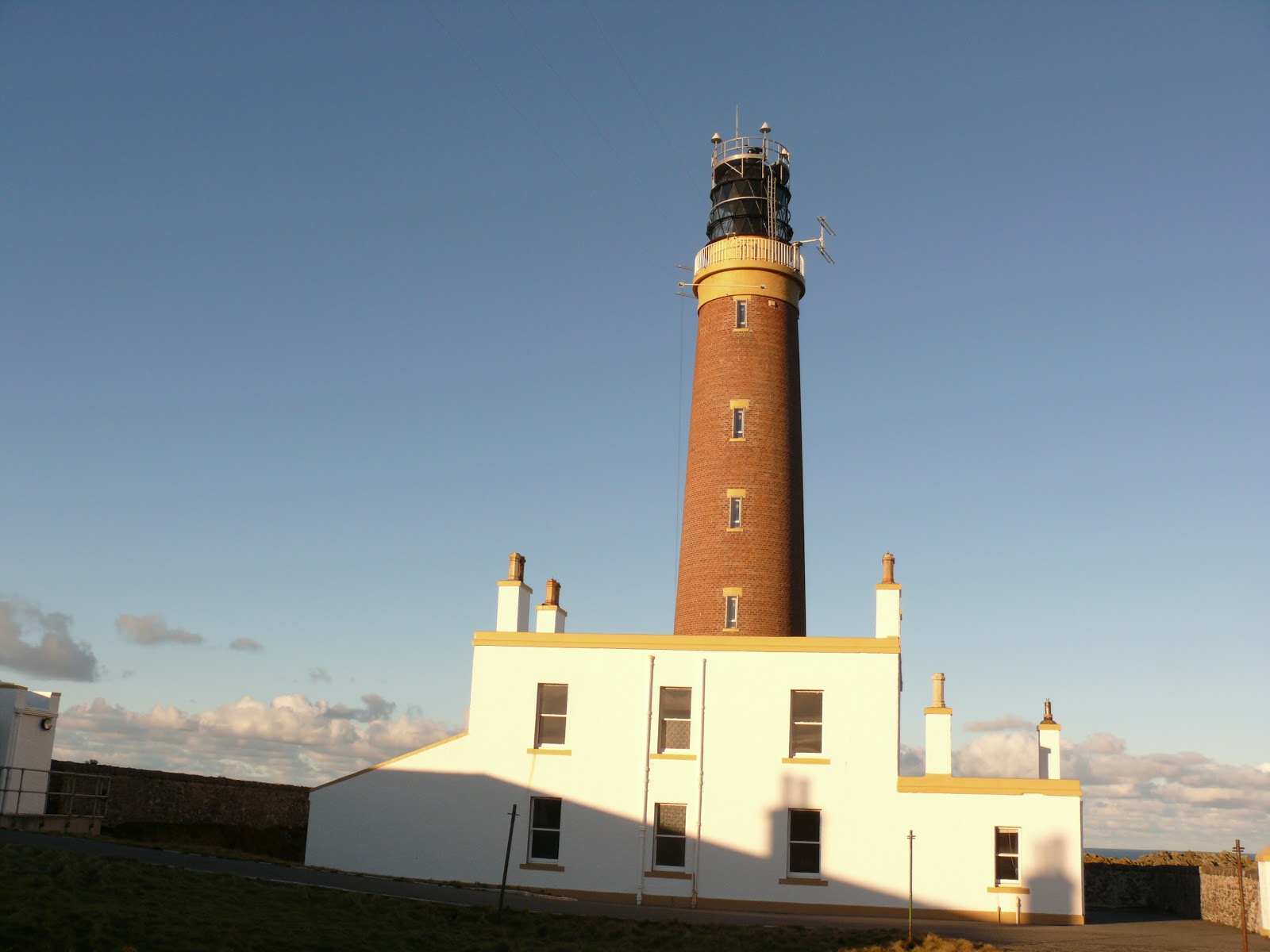
BUTT OF LEWIS LIGHTHOUSE

                                              BUTT OF LEWIS LIGHTHOUSE


Had a great day at the 150th birthday celebration event for the lighthouse last Saturday.The weather was wonderful and after listening to a couple of really interesting talks and then climbing the 168 steps inside the light, it was quite exciting to be able to wander round the external balcony at the top and potter about taking these photographs.
  All UK lighthouses are now automated and unstaffed and the Scottish and Isle of Man lights are monitored by remote control from the Northern Lighthouse Board offices in Edinburgh. Here in the Outer Hebrides, there is just one keeper/engineer who looks after the day to day routine maintenance of all the land lights on Lewis and Harris.  He conducted the tour around the Butt lighthouse and its buildings on my visit and told me that this was the first time the NLB have opened the light itself to the general public.

A few facts -  The Butt of Lewis lighthouse is situated at the most Northerly point of the Isle of Lewis and was built of red brick in 1862 by David Stevenson, who was engineer to the Northern Lighthouse Board at the time. It is 37 metres high, stands 52 metres above sea level and the brickwork remains unpainted, which I think is probably unusual. 
The beam flashes once every five seconds, the fog horn was discontinued in 1995 and the light was automated in 1998.

The light is powered by the bank of 12v batteries shown in the photo. They are charged from the mains and the keeper said that during power cuts, which occur frequently here in Winter, the batteries are capable of operating the light for 2-3 days if necessary, until power is restored.
 
The concrete owl in the picture is one of two on the balcony, placed there to deter birds from flying into the light beam. I have always assumed that many birds are killed by hitting the glass in lighthouses, but the keeper said that casualties are relatively few at the Butt and that the tiny Storm Petrel is usually the victim.

I think St Kilda may be about to lose some of its mystery. When I first visited there in 1987, there were no day trips, no cruise ships and few visitors apart from passing yachties, charters, work party volunteers and military personnel. Well, that seems to have changed. The National Trust for Scotland, who own St Kilda, have just issued figures which show that 4,081 people have visited this year, of whom 1400 were landed from cruise ships and more than 2000 souls arrived on day trip boats, mainly from Lewis and Harris. Day visits especially, are very weather dependent and May and June this year were particularly glorious.  Boat operators are obviously satisfying a demand from the public to visit St Kilda, but I can't help wonder what short and long term effects on the infrastructure, flora and fauna will result from ever increasing numbers of arriving tourists. 

Alcohol abuse is a real problem here, as in the rest of the UK and an interesting and welcome new initiative, promoting alcohol free musical evenings for young people, has just been announced. A series of 'Sober Island Nites' will take place during the next six months, where established and some locally famous musicians will play alongside new and young bands and singers. The events are funded through the Alcohol and Drugs Partnership and the Community Learning and Development office. A spokesman said 'Music brings people of all ages together and these music events provide an ideal setting for demonstrating that you can have a good time without alcohol.'

There is a great deal of poverty on these islands caused by unemployment, a reduction in welfare benefits and the extraordinarily high cost of fuel, especially oil, for heating poorly insulated homes. Benefit claimants and elderly people on pensions are most seriously affected and during the course of my work, before I retired, I regularly met people who were frequently having to choose between eating food or heating their homes. It comes as no surprise then to learn that a consortium of a local church, a charitable trust and the Western Isles Poverty Action Group are setting up a food bank to try and help address the poverty crisis facing many island residents. The 'Eilean Siar Foodbank' will provide three day food packages to individuals and families referred to them by local agencies.
I feel quite ashamed to live in a modern first world liberal society where this form of support is needed, but wish the project well.

Good news. In my last blog, I mentioned that I had commenced battle with the Royal Bank of Scotland after requesting £300 from a cash machine and only being issued with £285. The money was dispensed in £20 notes, but one of them was a £5 note, leaving me £15 short.
The local branch failed to respond to my complaint, so after waiting five weeks without contact from them, I complained to RBS head office. Yesterday, I received a letter from RBS Customer Relations saying that they agreed with my complaint and conceded that it is possible for mistakes like this to occur even though the cash is loaded into sealed containers. They have now credited my account with the missing £15 and an additional sum as compensation 'for the trouble we caused.'
I had fully expected RBS, as a huge organisation, to reject my complaint and had already prepared my letter of further complaint to the Banking Ombudsman.
RBS dealt with my complaint sensibly, fairly and  quickly and have averted the need for me to close my account with them.  A shame really that they have been so helpful, 'cos I was looking forward to a bit of an extended fight.

Wednesday, October 17, 2012

A CORNER OF STORNOWAY HARBOUR


Life is a bit more active than usual at the ranch just now. I have a friend from the South staying for three weeks and he is particularly keen on fending off old age and remaining fit as long as possible. The weather here on Lewis has been fantastic for much of the last week and he has been dragging me out for a walk most days, although I confess to being reluctant on occasions. 
Following quite a lot of illness in recent years, including a broken leg which has limited my mobility, I have not been keen to venture far, especially as the leg still hurts when exercised. 
Nevertheless, I've had my walking boots on several times in the last couple of weeks and have to admit that I've thoroughly enjoyed getting out and about  and I have to concede that my leg has improved with this new burst of exercise. There are some wonderful walks with staggering views within a mile or two of the house and it's been good to have some company to do them with.

You may remember that I mentioned the local B&B owner who has taken on Tripadviser over their refusal to remove unsubstantiated poor reviews. Well good news and bad news on that front.
At Stornoway Sheriff Court last week, Tripadviser were forced to accept that they are subject to Scottish law and can be taken to Court on this side of the Atlantic. The bad news though is that the Sheriff has agreed to Tripadviser's demand for the case to be transferred to a higher Court. He ruled that the case involves contract law which is too complicated to be heard in a small claims Court. This ruling will require the B&B owner to hire a lawyer and be subject to the possibility of incurring unlimited expenses. Although he is appealing that decision, the B&B owner has said that if he loses, he cannot afford to fight his case in a higher Court and will be forced to abandon his dispute.
 So the probability is that Tripadviser will get its way, win by the exercise of might and continue to print whatever reviewers place on the website.

A sad event has happened here with the sale of the last herd of dairy cows in the Outer Hebrides. Competition from low priced supermarket milk and the high cost of farming on the Islands has forced the Lewis farm to sell its milking herd of 40 cows at Dingwall Market after 52 years of producing milk. The family who own the farm will continue to raise beef cattle and sheep, but we will be unable to purchase locally produced milk from now on. 

I've always had a bit of a thing about lighthouses and we are blessed in having a number of fine examples spread around these islands. One of my favourites is the Butt of Lewis lighthouse at Ness, a few miles North of here. The  Island Book Trust is organising a one day event next Saturday to celebrate the 150th anniversary of the light and myself and visiting friend have booked to go on a grand tour of the lighthouse and surrounding buildings and we are very much looking forward to that.

Finally, to finish off, I am engaged in a David and Goliath battle of my own just now with the Royal Bank of Scotland, with whom I have banked for forty two years without problem.
About a month ago, I withdrew £300, in £20 notes, from the cash machine at the bank in Stornoway,  only to discover that  one of the notes in the pile of money was a £5 note, meaning that I only received £285. I had no money in my wallet at the time of the withdrawal, so am quite confident that I have not made a mistake. As soon as I discovered the error, I went into the bank to report it and whilst the staff were polite and helpful, they appeared sceptical about the possibility that bank systems would allow this to happen. Having had no satisfaction from the local bank branch, I have lodged a formal complaint at RBS headquarters in Edinburgh and now await their response. More to follow.


Tuesday, September 25, 2012

LEWS CASTLE, STORNOWAY


Following years of slow decay, work has now started on Lews Castle to turn it from a crumbling unloved wreck into an upmarket hotel and spanking new state of the art museum for the islands. Several million pounds has been allocated to stabilise and do basic repairs to the building and the remaining work will be completed within two years, assuming funding is obtained. The total cost of the project, amounting to some £13 million, is being bankrolled by the Western Isles Council, Heritage Lottery Fund and an anticipated grant from the European Union.
If all goes to plan, the hotel and museum will be completed in August 2014 and both are expected to become major tourist attractions, drawing in an anticipated 50,000 visitors a year between them and providing new employment opportunities. In the meantime, the existing museum on Francis Street is closing at the beginning of October and the staff will spend the next two years preparing for the opening of the new museum. 

I love the feeling of change in Autumn, when the temperature drops, the fires are lit and the days become significantly shorter. With almost no deciduous trees on the island, there is no dramatic change from green to brown, or leaf drop, to herald the advent of Winter. The obvious signs of colder days to come are the browning of the moors all around us and the disappearance of most flowers.
I was out taking a walk this morning though and was pleased to see the variety of flowers that are still in bloom. The purple heather is dying back now, but the vivid orange Montbretia (Crocosmia), which grows wild, as well as in gardens, is to be found on many roadside verges just now. It provides a welcome cheerful burst of late colour, as does the lovely Devil's Bit Scabious, with it's pale blue pompoms flowering wherever it is wet and boggy. The flower heads of Bog Asphodel are long gone, but the remaining burnt orange stems are attractive and to be found in all the wet parts of the croft. The gorgeous little yellow Tormentil is still in flower and I even found a late flowering patch of Mimulus, the monkey flower, in a nearby ditch.

The Harris Tweed industry here on Lewis and Harris was on its knees a few years ago and in danger of disappearing, but has recently undergone a Phoenix like resurgence.
After a long period of poor marketing and leadership and reducing sales, huge efforts have been made to revitalise Harris Tweed making and boom times seem to be here again. New weavers have been trained at local colleges and the industry is now said to be worth £4 million a year and currently supporting more than 400 jobs in the Outer Hebrides.
This renewed interest has created its own problems. No looms have been manufactured for years and all the available second hand looms have been put back into productive use, but no one is making or supplying spare parts, which is causing difficulties when looms break down.
In an initiative to deal with this, the Harris Tweed Weavers Association is developing a 'loom spares and maintenance' service to obtain and keep stocks of replacement loom parts in reserve on the island. A European Union grant will pay for an administrator and a stock of replacement spare parts, although I have no idea where they will be sourced from.
Individual weavers will pay £3 for each tweed they make, to support the new scheme, which will hopefully keep the looms rolling. 

It is no secret that alcohol abuse has long been a problem here on the islands, but I was a bit taken aback recently to read that a new report is claiming that the misuse of alcohol is costing the Outer Hebrides in the region of £26 million pounds every year.
Alcohol Focus Scotland says its study arrives at this figure by adding together the cost of hospital admissions and treatment for alcohol related medical problems, crime, Social Work interventions and the cost of care home places for people with alcohol addictions. It details a whole host of other negative effects of abusive drinking including domestic violence, absences from and unfitness to work and premature deaths. 
Apart from the sum of money said to be involved, little of this information is a surprise, except that the report states that the majority of alcohol is now purchased at supermarkets and drunk at home and not bought in pubs and other licenced premises, as was once the case. 
Alcohol Focus Scotland say they hope their report will assist licensing boards to regulate alcohol licensing with the aim of reducing harm and the cost to the public purse of alcohol misuse.  

Finally, it looks like the poor Grey Lag Goose is a victim of its own success here on the Islands and is about to pay the price. 
These handsome birds were once only visitors, on migration,  but many are now resident throughout the year and have been so successful in breeding that their numbers have exploded recently. I can now look out of my windows most days and see small flocks of Grey Lags grazing on the croft, which was a rare sight a few years ago.
There are estimated to be over 6000 geese living here and causing huge amounts of damage through eating crops and grass and fouling grasslands with their droppings, especially in Benbecula and Uist. 
Non lethal methods of controlling their numbers - such as gas scarers, scarecrows and imitation birds of prey - have failed and Scottish Natural Heritage have now agreed to issue licences to shoot some of the the resident geese out of season in an attempt to control their numbers, before the migratory geese arrive to start feasting on our lovely winter grass.

Tuesday, September 11, 2012

LOCH SUAINEABHAL, UIG, LEWIS


A guest house owner running a bed & breakfast a few miles from here has commenced court proceedings against the internet giant Tripadvisor, who, he says, have refused to remove 'false and malicious' claims about his business.
He is arguing that the website is careless by failing to delete inaccurate or false guest reviews of his establishment and he is particularly exercised by 'an untrue'  review which criticised the size of the portions and quality of the food he serves.  He is reported as saying that he doesn't mind comments which truthfully criticise his eccentric attitude or his decor, but draws the line at people falsely slating his wife's cooking.
This man has launched a small claims action at Stornoway Sheriff Court maintaining that the Tripadvisor website has lost him valuable bookings by refusing to take down the offending review.
By suing Tripadvisor in the Small Claims Court, the guest house owner will only have to pay a maximum of £75 in legal expenses should he lose his case.
So far, so good.
Tripadvisor initially responded by challenging the jurisdiction of the Scottish court system to hear this case, but are now attempting to have the legal action transferred to a higher court in Scotland, where legal expenses are unlimited and could run into many thousands of pounds.  Their legal team in Massachusetts in the United States have instructed a Stornoway lawyer to apply to move the legal action into the more expensive procedure. He made a verbal application to have the case transferred at Stornoway Court last week, but his request was rejected by the Sheriff, who has now given Tripadvisor four weeks to submit a proper written notice of its motion.
Outside of the court, the man making the claim hit out at Tripadvisor's tactics and said:
' My case is well within the remit of the small claims court. Tripadvisor are a $4billion rated company taking on one of the most remote B&B's in Britain and they are trying to frighten us with expenses and delay. They are threatening us with the cost. People can't get any justice from Tripadvisor.'
It is difficult not to be sympathetic to a David and Goliath battle like this one and I wish the guest house owner well.
Updates to follow as they occur.

We are not a part of the world where you would usually expect to come across Tuna fish swimming in the sea, but several vessels have reported seeing shoals of Tuna during the last couple of weeks. A pair of sea anglers fishing off the Butt of Lewis said that they saw a large shoal of Tuna, possibly Bonitos, and a wildlife charter vessel has given a credible and detailed description of several sightings of Bluefin Tuna whilst they were taking day trippers to St Kilda recently. 
The charter boat skipper said  'It was amazing to see the characteristic, upright, thin forked tails of Tuna darting through the water. Some were coming to within ten metres of us and you could see they were six or seven feet long, maybe more'
The Western Isles spokesman for Scottish Natural Heritage has stated that both sightings have been corroborated and speculated that the arrival of the Tuna is the result of warmer seas and climate change. He said 'Tuna don't usually come this far. A general change is being observed in the marine environment with fish turning up in areas they don't normally'.

Whilst we're on flora and fauna, the annual Ness Guga hunt to Sula Sgeir has just taken place and the hunters have now returned to Lewis with their allowed harvest of birds.
Guga are young gannets, which the men of Ness in the far North of Lewis have harvested yearly on Sula Sgeir since the 16th Century or before. The birds are considered a delicacy here and people will often queue up at the quayside to buy them straight off the boat, when the men return.
Every August, a group of men take a small boat out to Sula Sgeir, a little island about 40 miles North of Ness, where they spend two weeks catching, killing, salting and preserving the birds, which they then take back with them to Lewis. There is a long traditon of both catching and eating young Gannets here on Lewis and the salted birds are distributed among the families of the men who catch them and the surplus are sold locally to meet a high demand.
Although Gannets are protected under EU law, the Guga hunters have a special licence to collect a maximum of 2000 birds each year and it is hoped that this tradition will continue in future. The Royal Society for the Protection of Birds does not object to the annual hunt and have stated that Gannet numbers on Sula Sgeir are stable and possibly increasing and that the yearly cull seems to help in the long term conservation of the birds. 
There are periodic protests from conservationists against the Guga hunt, but little support for the protestors  from local residents, the Scottish Government, or official conservation bodies.

St Kilda is a World Heritage site, a jewel in the Hebridean crown and is a magical place to visit. The islands of St Kilda lie about 40 miles West of here and have become easier to get to in recent years, since it has become possible to make day trips to them on fast boats operating from both Lewis and Harris.
There are plans to create a St Kilda centre here in the Outer Hebrides and there is an ongoing battle between Lewis, Harris and North Uist to be the venue for the centre.
The opportunity to exploit St Kilda as a lucrative money making enterprise is the cause of a dispute currently going on between the National Trust for Scotland, who own St Kilda, and the Western Isles Council.  The Council wishes  to 'commercially promote the St Kilda brand and capitalise on the huge global interest in the islands' and is now locked in combat with the NTS over a claim of ownership to the European and UK right to trademark the St Kilda name. The National Trust for Scotland claim they are the best owner of the trademark because of their long term ownership of the St Kilda group of islands, while the Council want to 'use the trademark  responsibly for the economic benefit of the Hebrides'.
The spat continues.

All is well here at the ranch. I am still trying to get estimates for the replacement of the croft fencing, but one fencer has now been to measure up and I hope to get his quote shortly. A second fencer has made an appointment to come tomorrow and assuming he turns up, I might be able to get the work done before the Winter, although I doubt if it will happen that quickly.

My Archaeology course officially started this week, but I have had no lectures yet because of technical difficulties with the video conferencing equipment, which beams in live lectures from tutors based in Elgin, Orkney and Shetland. Hopefully, this is a temporary glitch which will be sorted rapidly. We'll see.


Tuesday, August 28, 2012

      LAST NIGHT'S SUNSET - FROM THE KITCHEN WINDOW.


It's been a busy few weeks since my last post.
 The camper van behaved well while I travelled around England and Scotland and during the last month or two, I've visited family and friends in Manchester, Yorkshire, Nottingham, Somerset, Derbyshire, Skye and Uist. It's been a very liberating experience just pottering around without time pressures or the need to find a hotel for the night and it's been lovely catching up with friends I've not seen for some time.
As always though, It's a great pleasure to return home after being away for a while and I love the feeling of approaching the croft, unlocking the back door of the house and wandering around upstairs and downstairs to find that nothing has changed in my absence.
It takes just a couple of hours to get the stove on, rooms warmed up and water heated before the house starts to feel cosy again and begins to acquire a feeling of homeliness and the smell of occupation.

When I'm away, I always feel slightly guilty that the birds are not being fed, but the twenty or so Rock Doves that use my bird table usually return within a day or two as they fly over and see seed on the table again. I'm fairly sure that the doves that visit me roost under the spans of the bridge at Great Bernera, which is about a mile away as the crow flies and fifteen miles by road - not that the birds travel here by road.

When the house was being renovated four years ago, I had endless problems with tradesmen, particularly plumbers and joiners, who let me down repeatedly by failing to turn up to do the job,  producing poor quality work, arriving drunk and inflating the price quoted to me. I thought all that was behind me, but I now find I seem to be going through a similar experience again.
A couple of years ago, I found myself sufficiently financially recovered from the house renovation to start thinking about turning my attention to the croft and garden area in front of the house. Much of the croft fencing, having had no attention for 30 or 40 years, now needs replacing. As a consequence of working full time though, breaking my leg badly and difficulties in finding contractors who wanted to do the work, I lost momentum and failed to get the job done.
Having retired and feeling much better now, I decided last week to get on with organising the refencing of the croft, with the aim of keeping out stray sheep and cattle, keeping sheep of my own and being a good neighbour. Using a list of approved contractors given to me by the Scottish Agriculture College office, I phoned the first company, who advertise regularly in all the  local papers. They seemed keen and we arranged for the man to come and prepare an estimate at 4pm last Saturday afternoon. It's Tuesday now and I'm still waiting for him to arrive or contact me with an excuse for not turning up. I also phoned a second contractor two days ago and left a message on his voicemail asking him to contact me if he was interested in doing the work. He has not replied and I have an overwhelming feeling of 'here we go again'. The fencing is not a small job. It needs about 700 metres of replacement fence and several gates, so will be fairly lucrative for whoever eventually does the work.
More reliably, an aquaintance, who is a landscape architect, is preparing a plan for me to turn the area in front of the house into a garden that will make the world gasp with admiration. The idea is that I will follow his plan/suggestions to create the garden during the next year or two with the fantasy that I will open it to visitors under the open garden scheme for charity, in about 3 years time. Well, It's a good thing to have goals, even unrealistic ones.  

On the wildlife front, another dead Minke whale was  washed up here yesterday, on the beach at Port of Ness, in the North of Lewis. This creature is about 8 metres long and while washed up whales are not uncommon throughout these islands, they do seem to be occurring with increasing frequency in recent years.

Finally, It's now less than two weeks before I become a student again and start my Archaeology course. Pencils are sharpened, text books purchased and the first symptoms of self doubt are beginning to intrude in on me. I woke up in the middle of last night consumed with thoughts about being too old, not being able to keep up with the youngsters and doubting whether I will be able to take in and remember all the course material. I know it's silly and I am looking forward to beginning a newlife, but I can't help feeling anxious about it just the same. 


Monday, June 25, 2012

SEAWEED HARVESTER ON LOCH ROAG

                                          SEAWEED HARVESTER ON LOCH ROAG

This fantastic bit of kit, a real boys toy, was busy cutting seaweed near my home when I took this photograph. It belongs to the Hebridean Seaweed Company, based near Stornoway, which dries and mills seaweed, which is then sold for use in the cosmetics and animal feed industries and as a soil enhancer. In addition to this floating machine, the seaweed is also cut by hand by collectors throughout these islands, who then sell the raw seaweed to the factory for processing.

I am acutely aware that it is more than a year since my last post and that I owe readers an explanation for my absence. It has been an eventful and sometimes traumatic twelve months, but life is getting back to an even keel again now and I am going to make an effort to write the blog regularly in future.

Soon after my blog entry in May of last year, I took a fall in the garden whilst feeding the birds and managed to break my leg in four places. It was painful, did not mend well and I was off work sick until October. The frustration of being in plaster from ankle to thigh, and being temporarily disabled and housebound had a fairly depressing effect on me and I lost all motivation for a while, other than just to get through the days. Living alone in a fairly remote situation meant that I received few casual visitors, although friends did come to help out regularly and do my shopping for me. In time, the plaster eventually came off and I returned to work in late October, feeling better mentally, but still in a lot of pain and with a pronounced limp. Fortunately, that has  improved and I'm now largely pain free and the limp has gone although I still can't walk any great distance.
At Christmas, having completed thirty years in my job, I made the decision to retire, whilst I was still young enough and fit enough (!) to do something else with my life. For a variety of reasons, including pressures at work and a very harsh and miserable Winter, I decided to continue working for a few months longer and delay my retirement until the better weather arrived in Spring. Well folks, the day eventually came and I am pleased to inform you that I  finally retired about three weeks ago. 
I'm still feeling a little lost and wondering if I've made the right decision, but I'm sure it will be alright in the end. I've recently bought a camper van and spent last week touring the Isle of Skye for the first time and I intend to travel to other parts of the UK in it over the Summer months.
 
The real change on the horizon for me is that I've decided to become a student again and have signed up for a full time course in Archaeology at the University of the Highlands and Islands, beginning in September. I do feel a bit anxious about studying again after all these years, but hopefully, it will be fun, interesting and keep me off the streets. I suspect that with the course and work around the house and croft to do, that I will be busier than ever before long, although I hope that I will have time left to do some voluntary work here. 


Monday, May 16, 2011

LEWIS CHESSPIECE

There are 93 of these 12th Century walrus ivory and whale tooth chess pieces, which were found in Uig, Isle of Lewis, sometime around 1831. Most of them are normally kept at the British Museum in London, with a few living in the National Museum of Scotland. The piece shown above, which I photographed at the weekend, is one of a number currently on display until September, at Museum nan Eilean in Stornoway. They are being housed in secure thick glass cabinets, which makes it difficult to do justice to the exquisite carving and workmanship of each piece in a photograph.
Best of all, the exhibition of chess pieces is absolutely free.

I'm not a fanatical bird watcher, but I do value the tremendous richness of bird life here which is absent in many other parts of the UK. During a memorable 2 hour period whilst driving from Lochmaddy to Eriskay last week, I saw two hen harriers, two short eared owls, several eiders, a flock of lapwings, a sea eagle, any number of shelduck and heard a cuckoo at the ferry terminal. To cap off a good week, I spent yesterday afternoon watching a pair of golden eagles which have an eyrie nearby and are busy feeding a single chick, hatched recently. There is a vantage point, a good distance from the nest, where the birds can be watched through a telescope without disturbing them.

Friend from the South has gone home now, but we managed to take advantage of the recent good weather to cut a substantial number of peats whilst he was here and they are now drying out on the moor. I will turn them this coming weekend and bring them home to stack when family visit in a few weeks time. Not sure when they will be used though because my stove is temporarily out of action. It started smoking ferociously a couple of weeks ago, suggesting a blockage, but when I investigated, part of the flexible flue liner came away and appears to have pitted and corroded through as if eaten by acid. It's only three years old and was very expensive, so need to find someone who knows about chimney problems and their solutions, not easy here.

Still having trouble finding someone who wants to provide estimates for replacing the croft fencing. They are either too busy, don't want to travel to this part of the island, or simply don't turn up when they say they will. It's not an urgent job, but until the fencing is replaced, I've got stray sheep from all over the village wandering about the croft. They are past masters at exploiting any weaknesses in the fence or jumping over in places where the fence sags.

Uist seems to be experiencing something of a tourist boom just now, which is causing me problems. It may be because of the Monty Hall effect, reduction in ferry fares because of RET or recent mentions on Countryfile, but there are visitors everywhere which means that most of the available accommodation is fully booked. I have to go back to Uist and Barra for a few days tomorrow and spent this morning phoning round trying to get somewhere to stay. My usual B&B has no vacancies and after phoning 15 separate guest houses and hotels, all of which are full, I've had to book into a bunkhouse for two nights. Oh well - cheap and cheerful.

I'm just coming to the end of reading a recently published book called The Blackhouse, by Peter May. It's set here on Lewis and is a detective novel about a brutal murder. The author is new to me, but the blurb says he is a long established writer with fifteen novels to his name and this one is excellent and enjoyable. I shan't give the story away, but it's very gripping, well written and I thoroughly recommend it. You can get a copy cheap from Amazon, with no postage charges.

Monday, April 25, 2011

EOLIGARRY JETTY, BARRA, LOOKING TOWARDS SOUTH UIST.


All is well here at the Homestead. Following a demanding couple of weeks at work, I now have a weeks holiday and am enjoying doing a bit of sightseeing and taking it easy with the friend who is visiting. The weather has improved dramatically and it's 13 or 14 degrees most days, which suits me fine. The flowers are starting to appear and it was lovely to see the Machair on Barra covered in Primroses earlier this week. I've just got Daffodils and Narcissus in bloom in the garden, but there are Violets in flower on the croft, Marsh Marigolds in the ditches and Silverweed has just surfaced and is uncurling everywhere.
The birds are returning too. Although I've seen nothing unusual yet, the Wheatears are back and there is a Rock Pipit outside the kitchen window as I write this. The Gyrfalcon that has been spotted up and down the islands recently has not been to see me.

Way back in 1984, a couple from England bought the buildings of Eilean Glas Lighthouse on the Island of Scalpay, a short distance from Tarbert, Harris, some forty miles from here. The lighthouse is historic, very picturesque and potentially a great tourist attraction, but is in a woeful condition at present. It's in a lovely position overlooking the Minch and is one of my favourite places for walking and pottering about.
In the mid 90's, apparently after getting into difficulties with the mortgage on the property, the female owner set up a fake Charity called the Friends of Eilean Glas and over the next couple of years, attracted donations to the charity and then systematically stole more than £100,000, which others had given, believing it was being used to maintain and improve the lighthouse buildings, which it clearly was not.
Well, chickens come home to roost and in 2004, both owners appeared before Southampton Crown Court, when they were each jailed for three years for fraud, later reduced to two years on appeal. The Court was told that the money was used to purchase shares and premium bonds, to buy the council house of the mother of the male owner - said to be a financial adviser - and to pay the school fees of their son.
The couple did their time, were ordered by the Court to repay some of the fraudulently obtained money from their remaining assets and all went quiet for a few years.
Moving forward to the present, the local Community on Scalpay are interested in purchasing the lighthouse to restore it and develop its potential for the benefit of all. A fly in the ointment though, is that the lighthouse buildings remain under the ownership of the Friends of Eilean Glas Trust, which is now controlled by the son of the two individuals who were jailed for fraud in 2004. In an email to the West Highland Free Press, the son said that the Trust (he and his parents?) had their own plans to develop the lighthouse site and hoped to secure funding from Historic Scotland in the coming months to help them achieve this. He then went on to say that :
" We recognise the benefit of Community involvement in the management of Eilean Glas and efforts will be made to involve the community in the daily operations and long term strategy of the lighthouse"
Just in case you might think that I'm making this story up, there is plenty of information on the internet about Eilean Glas and the role of the owners who were imprisoned.
A spokesman for the community group hoping to buy the lighthouse made his own statement this week saying:
" The actions of the owners of the Eilean Glas Lighthouse led directly to their imprisonment and to the current lamentable state of the buildings. I therefore think it is difficult to see how any funding body or community group could have the confidence to support any organisation that has the managerial involvement of any member of this family."

Went to the museum in Stornoway a few days ago to see the twenty three Lewis chessmen which are on display here until September. I first saw them many years ago in London, but had forgotten just how beautiful and imposing they are to look at. They are spectacularly well carved and such an important exhibit for us to have back on the island where they were discovered in 1831. Strongly recommend a visit to see them if you possibly can.

It's a bit windy, but I need to use the time usefully before I go back to work, so we're off to cut some peats now.


Saturday, April 02, 2011

MFV FUGLENES IMPOUNDED IN STORNOWAY HARBOUR ON FRIDAY MORNING


What an exciting week it's been here on Lewis.

A 4000 square mile area of sea around Rockall is designated as a Special Area of Conservation by the European Commission and fishing is prohibited within the area. This designation is intended to protect the habitat of many marine species, but particularly of a fragile and rare cold water coral known as Lophelia Pertusa -(great name for a Flamenco dancer?)
Well, on Tuesday, a Scottish Fisheries Protection Vessel, the Jura, arrested the longliner MFV Fuglenes, shown above, for fishing in the banned area. The Fuglenes, a 38 metre Norwegian fishing boat, was then escorted 300 miles to the nearest port, Stornoway, by the Jura, a journey which took 26 hours. On arrival at Stornoway, the skipper of the Fuglenes, Captain Johansen, was reported to the Procurator Fiscal for illegal fishing and the poor man was then hauled before the Sheriff at Stornoway Sheriff Court on Friday, where he pled guilty.
Captain Johansen, who was second in command of a Norwegian Navy U boat before he became a fishing skipper, told the Court that he had made a 'genuine mistake' and had inserted the wrong co-ordinates into the ship's plotter, which then gave him 'the false impression that we were fishing outside of the banned zone.'
The Fiscal told the Court that the Fuglenes was detained by the Fisheries Protection Vessel whilst she was fishing well within the prohibited area and the Sheriff observed that it was 'rather worrying' that a former First Officer of a submarine could get his plot co-ordinates so wrong.
Captain Johansen was fined £5000. His catch of fish, a holdful of Blue Ling, was weighed by Fisheries Enforcement Officers and a valuation of £31,500, after expenses, was agreed between them and the skipper . In a very generous gesture, Captain Johansen transferred that sum to his fishing agent before he left Stornoway and the money is now being donated to two Lewis charities, the Stornoway RNLI lifeboat and the Fishermen's Mission, both of whom expressed gratitude for this unexpected windfall.
Even as we speak, the Fuglenes is on its way back to Norway, where the skipper will sell his catch and presumably reflect on his navigational skills.

When I came to live here, more than five years ago, I brought with me three digital radios, two of which I had bought and one which was a gift. The FM signal where I used to live was rubbish and digital reception was great. I was particularly fond of listening to Planet Rock and BBC 7, which broadcasts lots of plays and repeats of old radio programmes from the 50's, 60's and 70's. Both of those stations were only broadcasting on digital, not FM.
Arriving on Lewis, I soon discovered that there was no digital radio signal here and no plans whatsoever to provide one. My digital radios were put in a cupboard and there they remained until yesterday, useless. From time to time, I thought about giving them away or selling them, but never got round to it. It has been a curious feature of life on Lewis that all of the shops selling electrical goods, including the Co-op and Tesco, have had shelves full of digital radios, when there has been absolutely no signal. A couple of years ago, I got the manager of the Co-op out of his office and asked him why he persisted in selling radios that could not be used here. The reply - ' I don't know. I just sell what head office send me. Perhaps people buy them as presents for relatives and friends on the mainland.' Perhaps, but an answer that infuriated me. Every few weeks since then, I have plugged in one of the digital radios to see if a signal has arrived while I've been asleep, but have always received a message saying 'No Digital Reception.'
Jump forward to this week . A local man wrote to the Hebrides Internet news site saying that he needed a new radio and bought an FM model which also had DAB. When he got it home and plugged it in, he was astonished to find that it tuned itself in to a number of digital radio stations. He then looked on the web and could find no information disclosing or boasting that we have been provided with a digital radio signal here in the Outer Hebrides. Eventually, he managed to find out that we started to receive a limited signal here on March 22, with no advertising or fanfare. In his letter, this man said he was receiving 11 BBC radio stations.
I have been playing with my radios this morning and find that I can receive 10 stations, all BBC, including the wonderful BBC 7. Sadly, no commercial stations, so no Planet Rock, but I'm grateful for what we've got.

Sunday, March 27, 2011

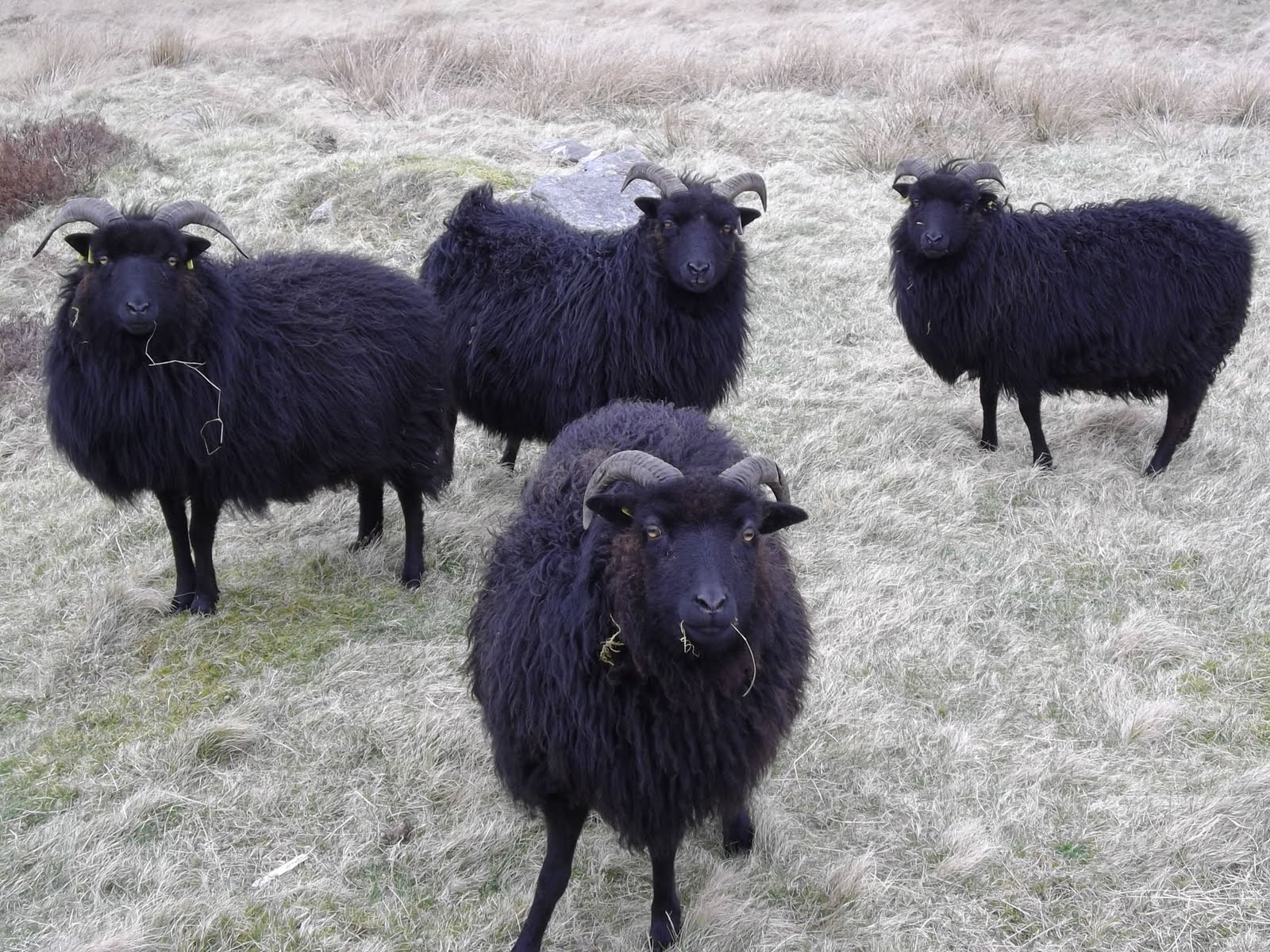
HEBRIDEAN SHEEP, BENBECULA


What a change in the weather. We're up to about 10 degrees outside most days now and I've turned the central heating off this weekend, because the house is warm enough with the solid fuel stove ticking over in the lounge.
A few days ago, I noticed that Scottish Hydro have reduced my monthly standing order for electricity to £20. When I phoned them to query this, they said my electricity usage is so low that I've been accumulating a credit balance and they have lowered my payments to correct this. I'm not conscious of making any particular efforts to economise, so I think I'm reaping the rewards of having installed lots of expensive insulation in the walls, floors and roof spaces when the house was renovated. Every light in the house is low energy and that helps too, but I do hate the poor light quality of low energy bulbs, which still take ages to reach full intensity and are difficult to read by.

A house nearby is having a wind turbine installed in the garden just now and I think I will probably go and see if the owners will talk to me about the pros and cons of domestic wind power after it's been up and running for a while. I like the idea of having wind and solar power providing some of my energy but the current costs, payback times and unrealistic claims made for their efficiency make installation uneconomic for me at present.

Went to the cinema on Friday for the first time this year, with a group of friends. Saw True Grit, which turned out to be a boring remake that added nothing to the original, but it was still good to get out. I've felt quite cocooned and insulated from the real world here at the Chateau during this harsh Winter and have to make a real effort to go out and mix with other people, especially at weekends.

I have finally decided to get a contractor in to replace the worst of the croft fencing and I'm now waiting for him to come and provide me with an estimate. I think that I've also made the decision to keep some sheep of my own and I'm going to see if I can find a small flock of Hebridean sheep, like those in the picture above, in the near future. If I do decide to retire next year, I want to ensure that I've got plenty to do with my time and I'm very conscious that this croft is underused. A few sheep, some hens and taming of the garden ground should keep me occupied for a while.

The first of my yearly visitors arrives in a couple of weeks and I'm hoping that the weather will be good enough for us to go out on the moor to cut some peats. I've now run out of wood and peat from last year, so I'm currently dependent on coal and oil for heating. I'd like to have a bigger peat stack dry and ready to use next Winter and there will also be lots of wood to burn from the rotten fence posts that are about to be replaced. Only the base rots, leaving four foot of good burnable wood that would cost me lots if I had to buy it.

We have two ferries providing our daily lifeline connection between Stornoway and Ullapool on the North Western mainland of Scotland. The 'Isle of Lewis' is the passenger and car ferry, while the 'Muirneag' carries articulated lorries bringing freight to the island overnight. Both vessels are reaching the end of their useful lives and discussions are now taking place about replacing them. The company that provides the ships for Caledonian MacBrayne, the ferry operator, favours building a single boat costing £49 million, which will carry passengers, cars and freight vehicles and will be about 25% bigger than the ' Isle of Lewis.' It will be a 116 metre roll on roll off ferry, powered by four diesel electric engines and will make the journey across the Minch in two and a half hours, reducing the current crossing time by 15 minutes. The proposed new boat would make three crossings every day and would effectively be running a shuttle service. If the plan for the new boat is approved by the Scottish Government, building it will start sometime next year.

Monday, February 28, 2011

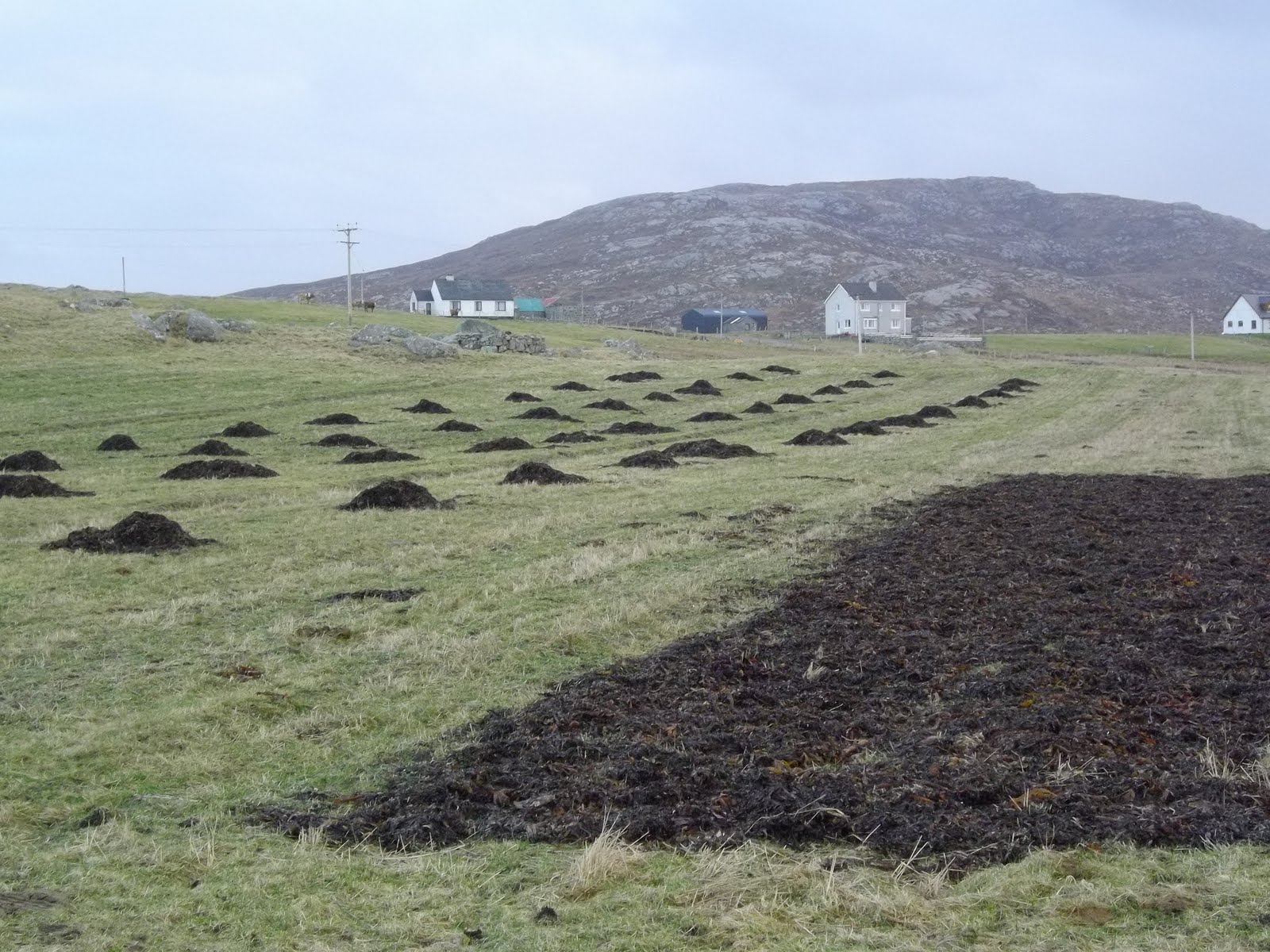
SPREADING SEAWEED, NEAR POLOCHAR, SOUTH UIST.

Seaweed is still collected on the foreshore and used as fertiliser by crofters throughout the islands. It's easy to obtain, free and effective.

A quick update for those interested in the progress of goings on here:

a) Recently arrived grandson smiles all day, feeds well and sleeps all night. No problems whatsoever so far and his big sister loves him. Following due deliberation, parents have decided not to send him back to the shop.

b) Boiler is working fantastically well since the engineer came and spoke sternly to it a few weeks ago. Have now almost decided to spend the money earmarked for a new boiler on replacing rotten croft fencing.

c) Little lighthouse at bottom of the croft is flashing regularly again since the man came and changed the bulb. I suppose it's churlish of me to observe that the light now has a slightly orangey glow to it rather than the previous bright white offering, which I preferred.

From time to time, I've written about the Uist Wader Project, which has been trapping and relocating hedgehogs, believed to be responsible for decimating the native wading bird population here by eating their eggs. The project, which started eight years ago, was reported only a few months ago as having been successful in increasing the number of ground nesting wading birds. Oops! Scientists from Scottish Natural Heritage are now saying that may not be the case and that 'there is no statistically valid evidence that the Uist Wader Project has resulted in an upturn in wader populations.' The scientists now speculate that the real culprits predating on the waders might be gulls, or chemical fertilisers applied to the machair, which may be upsetting the ecological balance. A SNH spokesperson said 'in retrospect, it would have been useful to have monitored gull numbers in more detail.'
Much of North Uist has been cleared of hedgehogs and the plan was to move the trappers into South Uist where the animals are still plentiful. Now that the SNH scientists have spoken though, that plan has been put on hold for four years while they search for evidence to discover if hedgehogs are innocent or guilty. The scientists now intend to monitor a patch of land by Loch Bee in South Uist, where there are lots of hedgehogs and compare the results with a plot in Benbecula, where there are few hedgehogs, but where flocks of gulls are present. SNH are seeking further funding of £100,000 for this new research and monitoring -- That's on top of the £1.3 million already spent on the Uist Wader Project, which has trapped and removed 1622 hedgehogs so far, at a cost of £800 per hedgehog.
On a positive note, the SNH spokesperson also said that the Uist Wader Project has brought benefit to the islands by creating employment and through wildlife tourism, said to be worth £130,000 a year to the local economy. Well there you are then.

Regular readers will remember that I have previously mentioned that the Stornoway Black Pudding Producers Association are making a bid to the EU for their puddings to receive protected status, to stop unscrupulous butchers on the mainland passing off their rubbish products as being 'Stornoway style' puddings. Others, such as Champagne, Melton Mowbray pork pies and Arbroath Smokies, have already received this coveted Protected Geographical Status and the Stornoway Black Pudding case will be considered by the EU in the near future.
Well, a twist in the tale. It is a little known fact that in addition to the four or five Stornoway butchers who make black puddings, there are at least two other long established black pudding makers here on the islands, away from Stornoway itself. One of those is at Cross Stores in Ness, about twenty five miles North of Stornoway, while the other is the butcher in Tarbert, Harris.
A week or two ago, at a council meeting in Stornoway, Councillors apparently tried to include these other pudding manufacturers under the Stornoway brand, for the purpose of the EU application.
Hell hath no fury! Almost immediately, the two independent butchers responded robustly with comments amounting to ' Not on your life mate, on your bike.'
The butcher in Tarbert, AD Munro, said he would fling out any suggestion that he should relabel his acclaimed Harris pudding as a Stornoway product. -- 'We sell all the Harris puddings we can make, no bother.'
Mr Morrison of Cross Stores in Ness said, ' We would rather retain the Ness black pudding identity than have it lumped in with the Stornoway label '. So there.
There are six or seven independent makers of black puddings here on Lewis and Harris. Wouldn't it be lovely if tourists started making pilgrimages here to sample each one of the puddings on a Western Isles Black Pudding Trail, just like they do with whisky on the mainland.

Sunday, February 13, 2011

SOUTH UIST TRACK

My faith in Lewis tradesmen has been partially restored by the heating engineer who has sorted out my central heating oil boiler.
The boiler broke down while I was away over Christmas and New Year and when I got back, it took me a few days to find a heating engineer who was willing to come and fix it. He arrived, took the boiler to pieces, replaced a part and it burst back into life. Just as the house was warming up and I began to feel secure again, it stopped and nothing I did could persuade it to work. Back came the engineer, who, with good grace, spent a lot of time trying to identify the new problem, before replacing a different part, which seemed to effect a cure. This time, the boiler functioned well for two days before having another breakdown, which I was also on the verge of suffering. I was embarrassed to call the engineer again, but did so and he was surprisingly enthusisastic about returning, on the grounds that these repeated breakdowns were a personal challenge and an affront to his professional skills and workmanship. Another part was replaced and away went the man with fingers crossed. Oh dear. This time the boiler only worked well for a couple of hours before breaking down. By now, I was at my wits end, but the engineer took the news in his stride and came back to the house quickly and cheerfully.
On this occasion, he brought his son, also a heating engineer and the two of them spent the best part of an afternoon stripping the boiler down, making all sorts of adjustments and replacing another part.
The boiler has now been working again faultlessly for over a week and I'm just beginning to relax and consider the possibility that the problem has been solved.
Everything about this engineer impressed me, but two things stand out. I was so fed up with the unreliability of the boiler that I was ready to ask him to rip it out and replace it with a new one. He wouldn't hear any of it and said that once he'd discovered the cause of the problems, the boiler should function happily for a good few years yet. Secondly, he absolutely refused to give me a bill for the visit by himself and his son and has since phoned to check that the boiler is still working. His attitude, good humour and desire to resolve the boiler faults have been impressive and I'm happy to provide his details to any reader who needs a Stornoway based heating engineer.

I like constancy in my life and am pleased to have a small working lighthouse on an islet in the sea loch at the bottom of the croft. It flashes every five seconds throughout the hours of darkness and I find it reassuring and welcoming.
In the New Year, it stopped without warning and no one locally I spoke to seemed to know why. I phoned the Northern Lighthouse Board hotline - really- and they denied any knowledge, but said they would look into it. The nice man on the other end of the phone was not willing to speculate on whether the light had become the victim of budget cuts, or just needed a new bulb and a service.
Nothing happened for several weeks and I began to think the light was gone forever. Well, imagine how pleased I was to be lying in my bed last night, when I noticed that the light was flashing again and reflecting in my bedroom off the wardrobe doors.
It's the little things that matter and make life good.

It is now possible to do a degree at Lews Castle College in Stornoway and at a variety of remote venues throughout Northern Scotland, which means that young people, and older folk, no longer have to go South for higher education unless they wish to.
Thirteen colleges and educational institutions offering both specialist and general courses have grouped together and were awarded official university status as the University of the Highlands and Islands on 2 February 2011. UHI is now Scotland's 15th University and offers courses by distance learning or personal attendance. Students can do BSc's in Renewable Energy, Sustainable Rural Economy & Archaeology in Stornoway, a BA in Gaelic language and Culture in Skye, a BA in Scottish History in Shetland and a BA in Theology at Dingwall. There are dozens of other degree level courses on offer as well and I'm thinking of enrolling for one myself when I retire in the next year or two.

A couple of years ago, myself and a friend were out fishing when a man appeared with a rifle and started shooting and killing seals that were feeding off the mackerel we were trying to catch. I wasn't traumatised by his behaviour, but I was angry that it was legal and he could just shoot these animals whenever he liked.
A new law now makes it illegal to kill seals at any time unless a special licence is held or there are compelling welfare reasons to end the suffering of an animal. Some annual licences have been issued to those who need to manage seal numbers to prevent seal damage to fisheries and fish farms, but killing a seal without a licence can now lead to six months in jail and/or a fine of up to £5000. I'm very pleased about that.

The Free Church of Scotland does not have a history of hymn singing or use of musical instruments in its services, but has a 100 year old strict tradition of instrument free, psalm only singing. The singing of psalms during a service is led by a Precentor, with the congregation responding. This traditon is threatened by a recent decision of the Church Commissioner's to allow hymn singing and instruments into worship for those Free Church congregations who wish to introduce them into their services.
A North Uist raised Minister who now preaches in Glasgow, is so opposed to the proposed change that he has decided to leave the Free Church and to seek a post as a pastor in another Scottish Presbyterian Church. There are rumblings that some congregations who want to maintain the status quo might also think of breaking away from the Free Church to form a new denomination maintaining the old traditions.